

How I got back into fiction
A perspective from a former "nonfiction person"

I once considered myself a “nonfiction person” as if a personal preference over nonfiction or fiction equates to one over cats or dogs.
I rarely ever read novels. Out of the 17 books I read in 2022, not a single one was a novel. Even out of the 41 books I read in 2025, only two were fiction: Wuthering Heights by Emily Bronte (which I previously wrote about) and rekt by Alex G.
My all-time favorite genre was, and still is, memoir. Even as a teen, I found personal narrative as a medium for storytelling extremely compelling. In high school, I devoured ‘00s classics like Running With Scissors by Augusten Burroughs and The Glass Castle by Jeanette Walls outside class, purely for pleasure.
I used to maintain a stance that nonfiction held a certain truth over fiction: the real, actual truth. In nonfiction, events written about actually happened. (Walk with me for a moment.) I held this rigid sense of “truth” close to my heart as a writer. For over a decade, I exclusively published nonfiction, whether it was nonfiction essays and journalistic reporting.
Of course, over time, my views have changed. There are different kinds of “truth” in fiction, including emotional truths, and many nonfiction stories, memoir or not, are notoriously fabricated and utterly untrue. Many events in dramatized films, for instance, have happened in real life.
. . .
While I have been on-and-off writing and pitching a memoir about growing up online for years, the project transformed into academic work I proposed in personal statements for grad school. Once grad school became a reality just a couple of months ago, I shifted towards a developing a new memoir manuscript around the themes of love and grief. Despite how excited I was to dive into a new project, I avoided it; I realize now writing about grief, in a season of such rapid change, was too emotionally heavy.
I needed a change of pace, so I turned my pen towards fiction.
. . .
Six years ago, I started a dialectical behavioral therapy (DBT) program which included individual talk therapy as well as group therapy sessions. Every Tuesday, I met with my therapist for a private session. Every Thursday, I attended a group therapy session alongside peers also in the program.
My life looked a lot different. I was self-employed as a freelance journalist with a (too) flexible schedule. I spent a lot of time doomscrolling. I generally lacked emotional regulation and distress tolerance skills that made social connection as easy as it is for me today.
I had also started dating again, but for the first time, limited my app feeds to women and nonbinary people. I had been out as queer and nonbinary for a couple of years, though I never stopped dating men entirely.
I had a lot of down time, alone in my bedroom. My therapist recommended I try a new hobby. “Writing,” I told her. Yes, I was already a working writer, but I was stubborn; if I had all this down time, I might as well pick up a personal writing project along the way.
I turned to Wattpad. I wasn’t planning to write fan fiction, but I needed something more engaging that just a Word doc to play around with. The social aspect of the app is what drew me in.
I started writing a novel about a nonbinary queer protagonist in DBT group therapy. I wrote about eight chapters. Chapters included details about specific DBT skills like TIPP (temperature, intense exercise, paced breathing, progressive muscle relaxation). Others retold my experience as a transgender patient in therapy.
This spring, I came back to this project and have been active on the platform. (The vibe over there has changed a lot!) The project is fun and not too serious, despite its themes of trauma and recovery—just the right flavor for the season of life I’m in. I even turned the story into a T4T romance, inspired by someone special in my life.
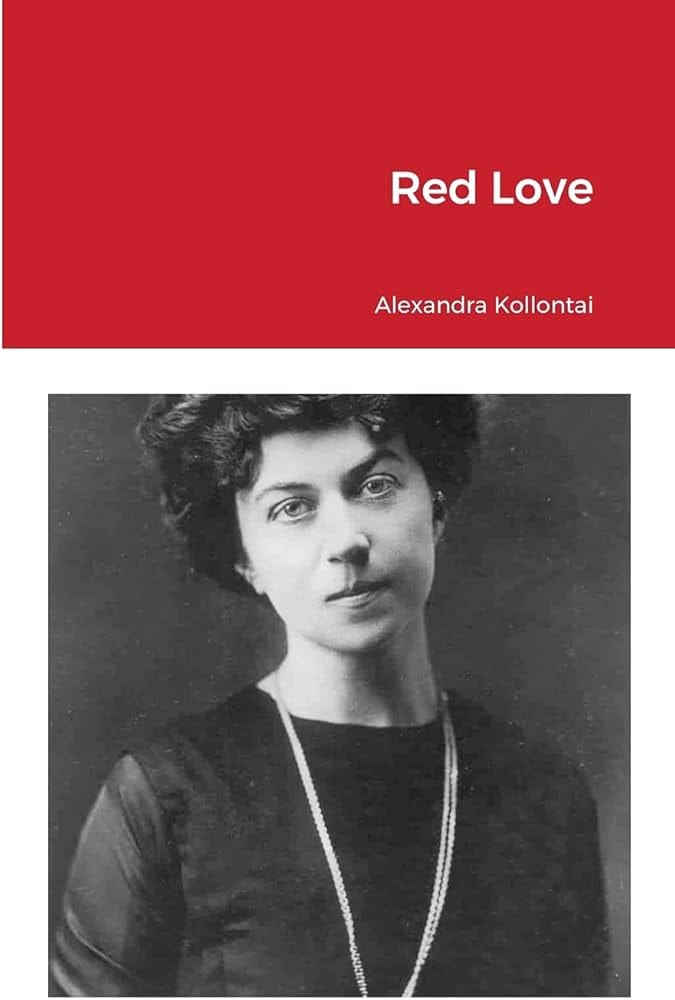
Writing romance got me back into reading romance. Most notably, I read the 1923 novel Red Love by Alexandra Kollontai, a Soviet feminist. I loved how this book ended, but to prevent spoilers (and encourage you to read it), I’ll plug a brief description from Wikipedia: “the novel asks deep question about the dynamics between Soviet socialism and the romantic life of Bolshevik women.”
Red Love re-imagined what romance could look like under an alternative economic model, outside of capitalism.
I think about reading the Twilight saga in high school. At age 14, I didn’t have context for Meyer’s Christian-inspired “romance” narrative. At the time, I thought it was not just not noble, but expected for a young woman to practice abstinence before marriage. I would later realize how much Mormonism influenced the plot. As a very special beta reader (ironically) named Christian of this very article explains, “The Cullens all live together as a family because Mormons believe the highest level of Heaven is where you get your own planet and live there with your fanily and basically just get to be the dad of all your adult, eternal life children.” He also emphasized that Meyer didn’t intend on converting anyone, but instead, just wrote through her own perspective, since all of this was normalized to her. (Thanks, Christian!)
But it doesn’t have to be this way.
It’s an enlightening exercise to imagine what queer love could look like through fiction. I like having a little corner of the internet I can experiment with, which is why I’m not publicly dropping a link to this story. However, if you want the link, reply to this email or send me a DM and maybe I will share it with you.
Love this, and you know I relate!!!!